
Blog
Forklift safety & OSHA compliance insights
Expert guides on certification, training, equipment, and warehouse safety — written by the team behind OSHA Operator.
Forklift Compliance in Rhode Island: OSHA Rules Employers Must Follow
Managing powered industrial truck safety in Rhode Island requires a clear understanding of jurisdiction. A common point of confusion for local plant managers and safety directors is whether the state operates under its own occupat
Read article →Forklift Compliance in South Carolina: OSHA Rules Employers Must Follow
Managing powered industrial truck (PIT) safety in South Carolina requires understanding both state and federal regulatory frameworks. Whether you run a distribution center along the I-85 industrial corridor in Upstate South Caroli
Read article →Forklift Compliance in South Dakota: OSHA Rules Employers Must Follow
Managing powered industrial truck safety in South Dakota requires navigating standard federal regulations, distinct regional logistics, and high-consequence industrial environments. Whether you run a meat processing plant in Sioux
Read article →Forklift Compliance in Tennessee: OSHA Rules Employers Must Follow
Tennessee is one of the most critical supply chain and manufacturing hubs in the United States. From the massive air freight and distribution centers in Memphis to the expanding automotive assembly plants in Smyrna, Spring Hill, a
Read article →Forklift Compliance in Texas: OSHA Rules Employers Must Follow
Operating powered industrial trucks (PITs) in Texas requires strict compliance with federal occupational safety standards. Whether you run a distribution center in the Dallas-Fort Worth Metroplex, a refinery along the Houston Ship
Read article →Forklift Compliance in Utah: OSHA Rules Employers Must Follow
Whether operating a distribution hub along the Wasatch Front, managing a manufacturing facility in Utah County, or running an outdoor equipment yard in rural Carbon County, powered industrial truck compliance is a primary focus fo
Read article →Forklift Compliance in Vermont: OSHA Rules Employers Must Follow
Operating powered industrial trucks in Vermont requires strict adherence to workplace safety regulations. Whether running a distribution center in Chittenden County, a stone quarry in Barre, or a dairy processing facility in the C
Read article →Forklift Compliance in Virginia: OSHA Rules Employers Must Follow
Managing powered industrial truck (PIT) compliance in Virginia requires navigating state-level enforcement alongside federal safety standards. While federal OSHA sets the benchmark for forklift safety, Virginia operates its own st
Read article →Forklift Compliance in Washington: OSHA Rules Employers Must Follow
If you manage warehouse, manufacturing, port, or agricultural operations in Washington state, ensuring forklift compliance isn't just a matter of federal standard alignment—it’s governed under state law. Washington runs its own St
Read article →Forklift Compliance in West Virginia: OSHA Rules Employers Must Follow
Managing powered industrial truck (PIT) compliance in West Virginia requires a clear understanding of federal workplace safety rules, industry-specific operational hazards, and the practical realities of managing facilities spread
Read article →Forklift Compliance in Wisconsin: OSHA Rules Employers Must Follow
Managing powered industrial trucks in Wisconsin requires navigating federal safety enforcement, state public-sector oversight, and sector-specific operational hazards. Whether you manage a cheese processing facility in Clark Count
Read article →Forklift Compliance in Wyoming: OSHA Rules Employers Must Follow
Wyoming employers operate across some of the most demanding working environments in North America—from harsh energy pads in the Powder River Basin to trona processing facilities in Sweetwater County and freight logistics hubs alon
Read article →Using a Forklift to Elevate Personnel: The Legal Requirements
Elevating an employee on a powered industrial truck carries extreme risk. Falling from an elevated platform, getting caught in mast mechanisms, or tipping a truck due to shifting center-of-gravity forces frequently result in serio
Read article →Forklift Citation Penalties in 2026 and Your Real Exposure
Understand your real exposure to forklift citation penalties in 2026 and beyond. This article breaks down OSHA's regulatory framework (29 CFR 1910.178), citation types, financial penalties, and the hidden costs of non-compliance.
Read article →Forklift Fleet Maintenance as a Compliance Function
In many warehousing and manufacturing facilities, fleet maintenance is treated strictly as an operational metric—a line item focused on minimizing downtime and managing capital expenditure. When a hydraulic hose leaks or a brake p
Read article →Forklift Incident Investigation Playbook
When a powered industrial truck incident occurs on your facility floor, the immediate response determines whether your organization mitigates liability or exposes itself to severe OSHA citations, litigation, and recurring hazards.
Read article →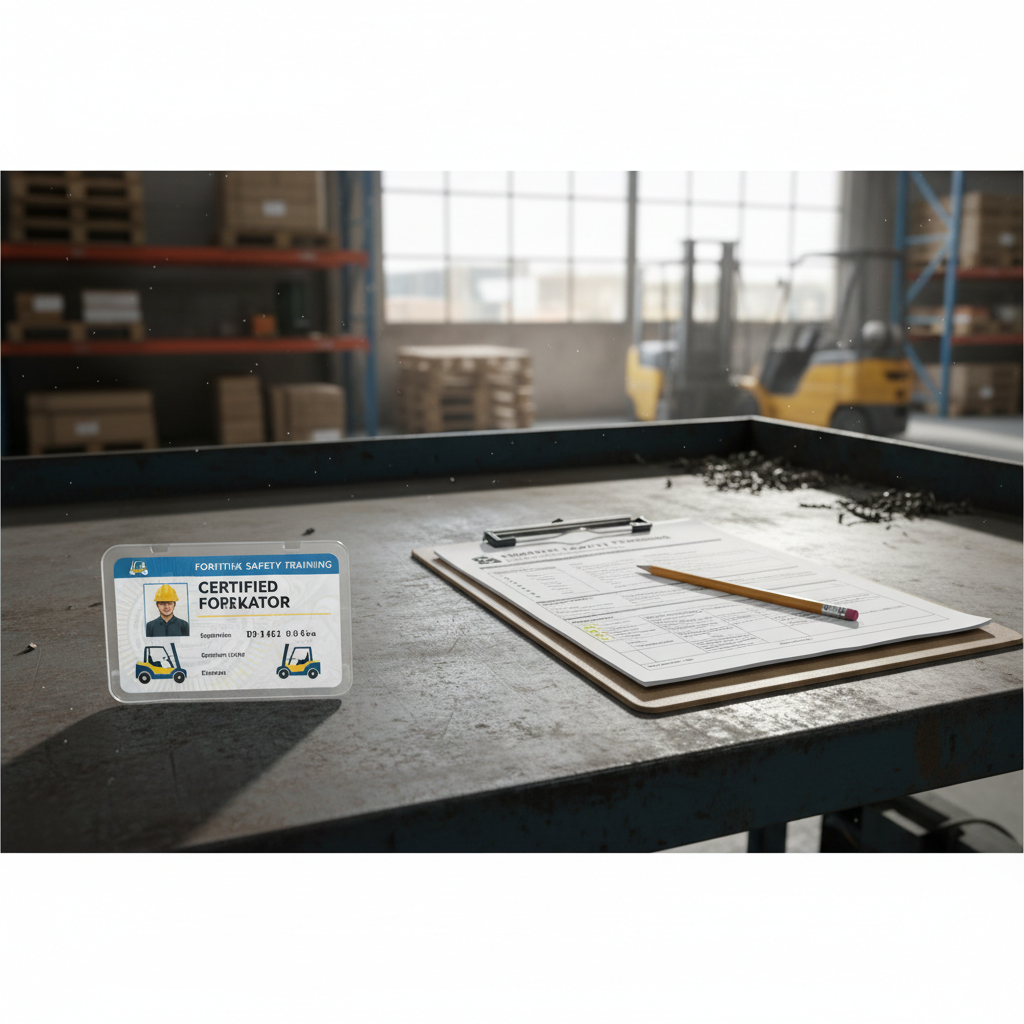
Forklift License vs Certification: What's the Difference?
You've probably heard people say "forklift license" — but technically, it doesn't exist under federal law. There's no DMV issuing forklift licenses. What OSHA actually requires is operator certification, and the distinction matters more…
Read article →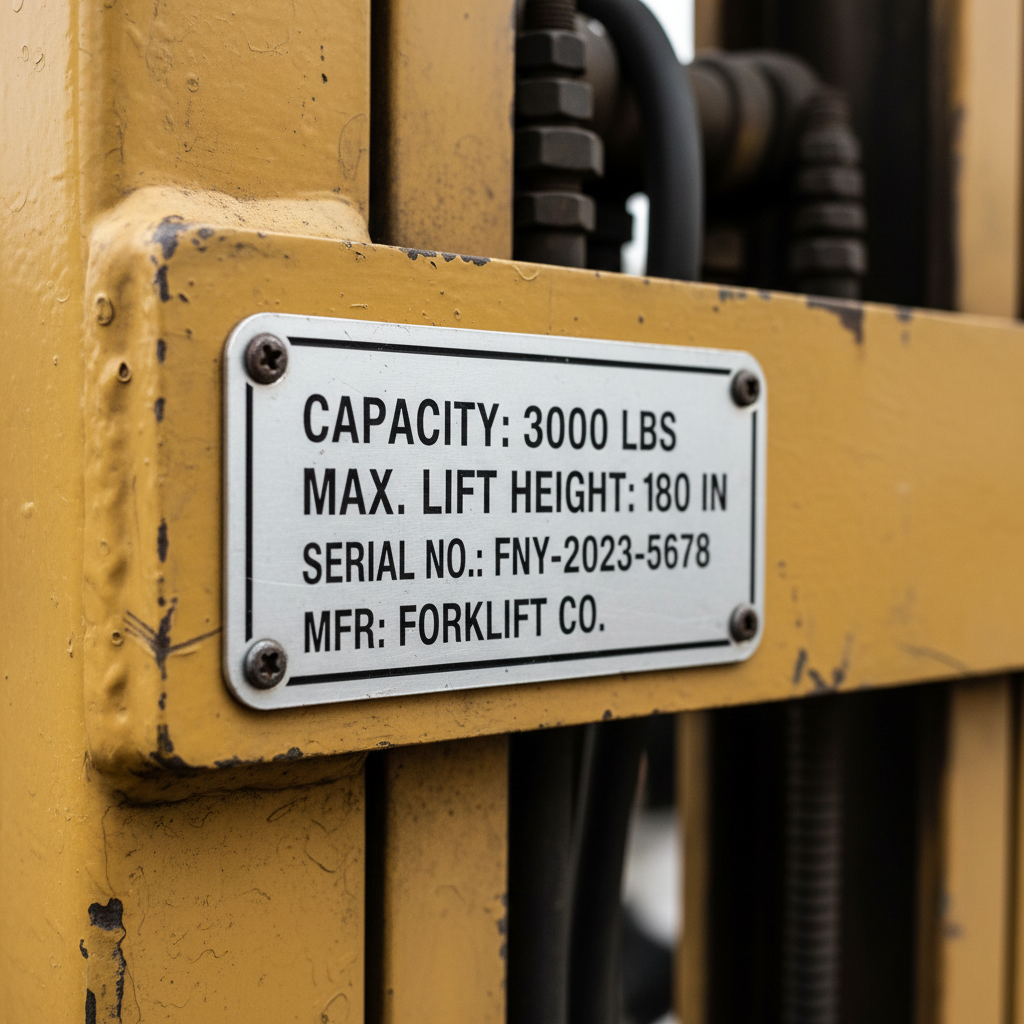
Forklift Load Capacity: How to Read the Data Plate & Calculate Safely
Misjudging load capacity is the #1 cause of forklift tip-overs. The good news: every truck has a data plate that tells you exactly what it can lift, if you know how to read it. Here's how, plus how attachments and load centers change the…
Read article →How Poor Maintenance Undermines Your Trained Operators
Even the most thoroughly trained forklift operators cannot perform their duties safely and efficiently if the equipment they are using is poorly maintained. This article will explore the critical l…
Read article →Forklift Operator Evaluation Form: What the Employer Completes and Why
Online formal instruction covers the classroom part of 29 CFR 1910.178(l). The practical evaluation is done by the employer. Here is the form we provide and how it fits the training record.
Read article →