
Blog
Forklift safety & OSHA compliance insights
Expert guides on certification, training, equipment, and warehouse safety — written by the team behind OSHA Operator.
Post-Accident Retraining: What OSHA Requires After an Incident
Workplace incidents involving powered industrial trucks trigger specific OSHA retraining requirements to prevent recurrence and enhance safety. Employers must understand and implement these mandates, outlined in 29 CFR 1910.178.
Read article →Preparing for a National or Local Emphasis Program Inspection
When an OSHA Compliance Safety and Health Officer (CSHO) arrives at your facility, it is rarely a random event. Under OSHA Directive CPL 03-00-024, launched in July 2023, federal OSHA established a three-year National Emphasis Pro
Read article →Preparing Your Warehouse for an Unannounced OSHA Visit
An unannounced visit from the Occupational Safety and Health Administration OSHA can be a source of stress for any business owner or safety manager. However, with proper preparation and a thorough …
Read article →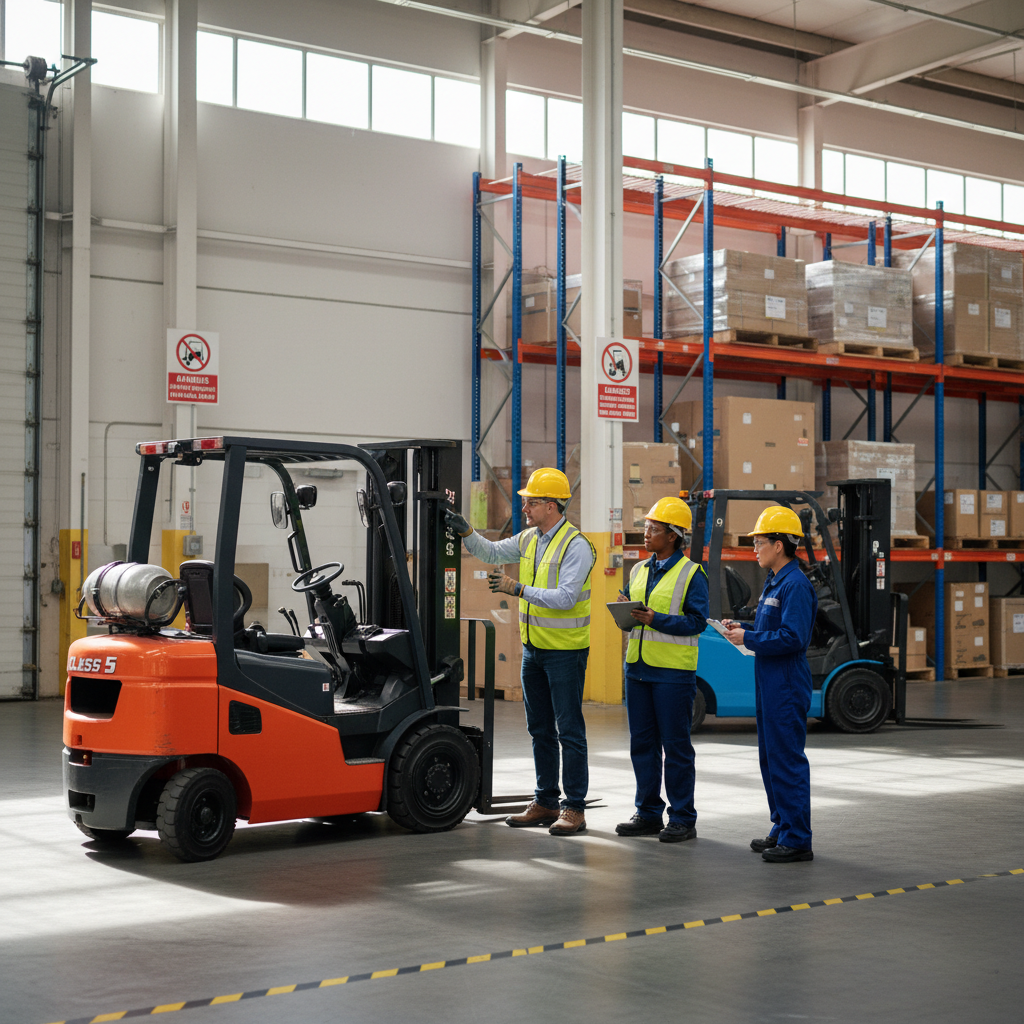
Propane & Diesel Forklifts (Class 4 & 5): Internal Combustion Guide
Comprehensive guide to Class 4 and 5 propane and diesel forklifts, covering safety, training, and OSHA compliance.
Read article →Propane Forklift Safety and Cylinder Handling
Liquid propane gas (LPG) remains one of the most common fuel sources for Class 4 and Class 5 internal combustion engine forklifts. Propane delivers high torque, functions outdoors and indoors, and takes minutes to refuel compared
Read article →Proving Forklift Compliance During a Customer or Client Audit
Learn how to effectively demonstrate your organization's forklift compliance during customer and client audits. This article covers key areas like operator certification, maintenance records, and workplace safety protocols, citing OSHA regulations.
Read article →Reach Truck Training for Narrow-Aisle Warehouse Teams
Reach trucks are essential equipment in many modern warehouses, particularly those designed for high-density storage and narrow aisles. Their specialized design allows them to operate efficiently i…
Read article →Using Certification to Reduce Operator Turnover
High employee turnover among forklift operators significantly impacts businesses through direct recruitment and training costs, lost productivity, and increased safety risks. Learn how investing in OSHA-compliant certification programs can improve retention.
Read article →Renting Forklifts? Your Training Obligations Don't Change
Renting forklifts introduces specific considerations for businesses, but it does not alter fundamental safety obligations. Employers remain fully responsible for ensuring that all forklift operator…
Read article →How to Respond to a Forklift Near-Miss the Right Way
A forklift near-miss is an unplanned event that did not result in injury, illness, or damage but had the potential to do so. These incidents are critical indicators of underlying safety deficiencie…
Read article →How to Respond to a Forklift Citation: Timeline and Options
The certified letter from the U.S. Department of Labor arrives, and inside is OSHA Form 2: Citation and Notification of Penalty. Whether the compliance officer flagged an uncertified operator under 29 CFR 1910.178(l), missing seat
Read article →A Safety Manager's First 90 Days Fixing a Forklift Program
As a safety manager stepping into a new role, the first 90 days are critical for assessing existing safety programs and implementing necessary improvements. When it comes to powered industrial truc…
Read article →A Safety Manager's First 90 Days: Fixing Forklift Compliance
Taking over as safety manager at a manufacturing plant, distribution center, or construction site often comes with a common, unwelcome discovery: an undocumented or broken forklift safety program. You open the compliance binder on
Read article →Scheduling Forklift Training Around Two and Three Shift Operations
Successfully scheduling OSHA-compliant forklift operator training in multi-shift operations requires careful planning to minimize disruption and ensure continuous safety. This article provides strategies for effective training across shifts.
Read article →Scissor Lift vs Forklift Training: What Employers Must Provide Separately
Employers often wonder if forklift certification also covers scissor lifts. It does not: a forklift is a powered industrial truck under 29 CFR 1910.178, while a scissor lift is a mobile elevating work platform covered by 29 CFR 1910.67, 1926.453 and the ANSI A92 standards — different equipment classes under different standards, requiring separate training.
Read article →Second-Chance Hiring: Free Forklift Certification for Returning Citizens
You did the time. You're trying to do the work. We see you — and we'll waive your forklift certification fee. Here's how the OSHA Operator second-chance program works.
Read article →Sit-Down vs Stand-Up: Choosing Training for a Mixed Fleet
Navigating a mixed fleet of sit-down and stand-up forklifts requires a strategic approach to operator training. This article details OSHA regulations, operational differences, and training considerations to ensure compliance and safety.
Read article →Site-Specific Training Topics OSHA Expects You to Cover
Workplace-specific training is a critical component of OSHA's powered industrial truck operator certification requirements. While general knowledge of forklift operation is essential, OSHA mandates…
Read article →Why OSHA Requires Forklift Training in a Language Workers Understand
If an operator on your facility floor signs an English safety sign-in sheet, passes an English written test with a peer’s help, but cannot read the warning labels on a Class I counterbalanced sit-down truck or explain the stabilit
Read article →Standardizing Forklift Training After an Acquisition
Standardizing forklift training after an acquisition is crucial for regulatory compliance, operational efficiency, and establishing a unified safety culture. This guide outlines how to assess current programs, develop a unified standard, and implement it effectively.
Read article →